
As India approaches January 2026, when the 8th Pay Commission (8th PC) recommendations are expected to take effect, there’s a growing question across the country’s bureaucratic and employee circles — where is it? The Narendra Modi government has yet to constitute the new commission, breaking a decades-long tradition of timely review of central pay structures.
The anxiety isn’t just administrative; it’s deeply personal for over 48 lakh central government employees and 68 lakh pensioners whose incomes depend on periodic revisions through these pay commissions. The government’s quiet handling of this matter has led to concern, confusion, and speculation.
What Is the 8th Pay Commission and Why It Matters
The pay commissions in India are expert panels appointed roughly every ten years to review and recommend changes to the salary, allowances, and pension structure of government employees. The 8th pay commission news should, by this logic, have already been official.
Historically, each pay commission has ensured that public sector salaries remain competitive and inflation-adjusted. The last one — the 7th Pay Commission, headed by Justice A.K. Mathur — was constituted in February 2014 and implemented on 1 January 2016. Following the same pattern, the 8th should have been announced by now.
But 2025 has brought silence instead of clarity.
The Political Timeline and Government Response
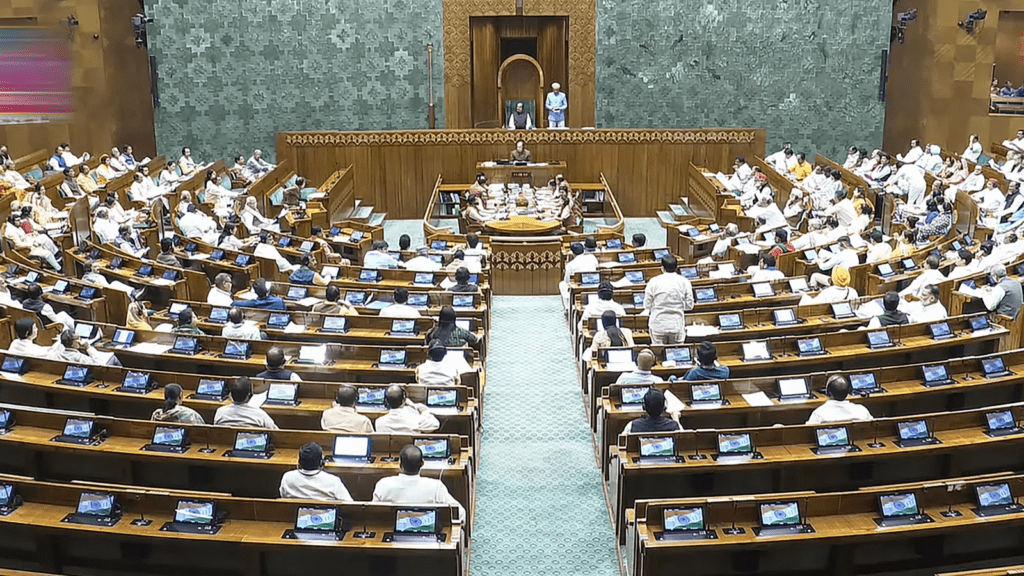
In January 2025, just before the Delhi elections, Union Minister Ashwini Vaishnaw briefly mentioned that the Union Cabinet had “discussed” the formation of the eighth pay commission. Many took this as confirmation that the process was underway.
However, by August 2025, a written reply in the Lok Sabha contradicted that assurance: the government had no current proposal to set up the commission. This conflicting communication left employees and unions puzzled.
“Yeh bilkul aspasht hai — agar January mein kaha tha toh ab mana kyun?” (It’s completely unclear — why deny it now after confirming it earlier?), said one senior Delhi Secretariat employee when Take The Lede reached out.
Tradition vs. Transition: Breaking the Pattern
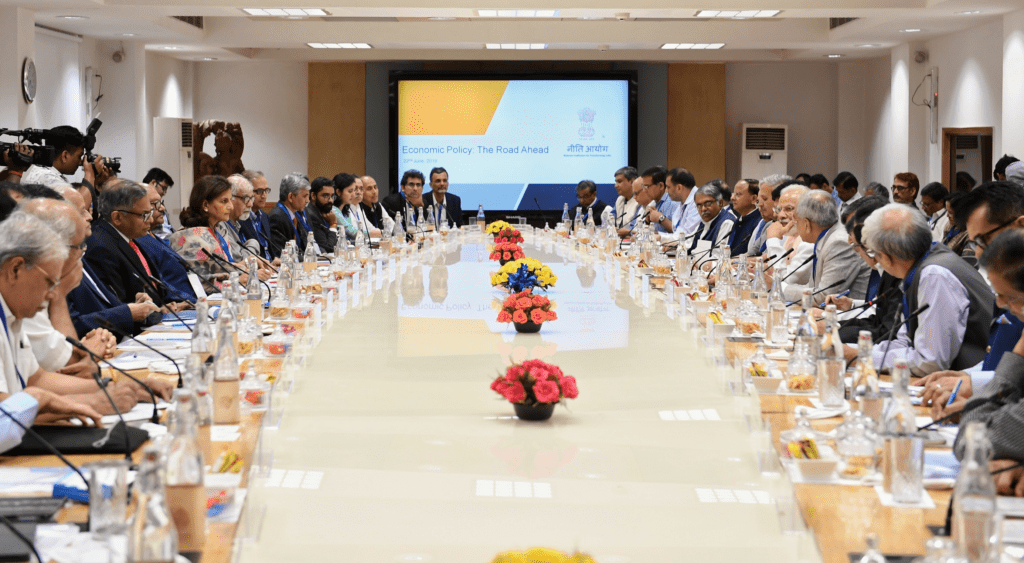
Since India’s independence, every pay commission has followed a roughly ten-year cycle. The 6th came in 2006, the 7th in 2016, and naturally, the 8th is due in 2026.
A delay or cancellation would be unprecedented — something that hasn’t happened in the seven-decade history of these reviews. It’s not just a matter of calendar routine; these revisions influence:
- Economic growth, through increased government spending.
- Inflation, as higher wages raise consumption.
- Fiscal deficit, which expands temporarily after every implementation.
By skipping or delaying the 8 pay commission, the government risks unsettling a delicate economic rhythm.
Why Is There a Delay?
While no official statement explains the 8th pay commission delay, several theories are circulating in Delhi’s policy corridors.
- Fiscal Pressure:
The Centre is managing high subsidy bills, defense pensions, and welfare schemes. A new commission could add an estimated ₹1.5–2 lakh crore annual burden. - Election Calculus:
With general elections due in 2026, the government may hold off announcements to avoid fiscal populism — or to time them closer to the polls for maximum impact. - Alternate Formula:
Some insiders hint at a new system that replaces pay commissions altogether, linking salary revisions directly to inflation and performance metrics, reviewed every five years instead of ten.
“A performance-linked pay scale could be the next big reform,” a senior NITI Aayog official said on condition of anonymity.
Pay Commission Timeline and Implementation
| Commission | Year Formed | Implemented On | Chairperson | Notable Features |
| 6th Pay Commission | 2006 | 1 Jan 2006 | Justice B.N. Srikrishna | Major hike in basic pay, introduction of Grade Pay |
| 7th Pay Commission | 2014 | 1 Jan 2016 | Justice A.K. Mathur | Abolished Grade Pay, introduced Pay Matrix |
| 8th Pay Commission | Pending | Due from 1 Jan 2026 | To Be Announced | Expected to review Pay Matrix, DA structure |
Central Government Employees React

The National Joint Council of Action (NJCA), representing government employees and railway unions, has already voiced its displeasure. According to their statement in September 2025, the Centre’s silence “amounts to denial of legitimate expectation.”
Several federations have planned protests in Delhi and Lucknow, urging the Prime Minister to “restore the sanctity of the 10-year cycle.”
For employees nearing retirement, the delay in the 8 pay commission news isn’t just procedural — it affects their pension calculation and gratuity benefits.
Economic Implications of a Missing Pay Commission
Every pay commission acts as a mini fiscal stimulus. The 7th PC alone injected around ₹1.02 lakh crore into the economy, boosting consumption in sectors like automobiles, housing, and retail.
Economists warn that postponing the 8th pay commission could slow down domestic demand in 2026, especially when private sector hiring remains cautious.
Yet, others argue that restraint may help control inflation and reduce fiscal strain — a priority for the government after heavy post-pandemic spending.
The Public Mood: Expectation vs. Reality

Across ministries and departments, uncertainty reigns. A Finance Ministry employee noted that while the fitment factor revision (a key multiplier determining new pay scales) is expected to increase from 2.57 to 3.68, there’s no guarantee it will happen without a formal commission.
“Humein bas clarity chahiye,” he said. “We’re not asking for miracles, just transparency.”
Even social media has turned the delay into a trending topic. On X (formerly Twitter), hashtags like #8thPayCommission and #PayCommission2026 periodically resurface as government employees demand updates.
Possible Alternatives to the Traditional 8th Pay Commission
Amid growing uncertainty, discussions within policy circles suggest the Modi government might be exploring an alternative to the 8th pay commission. Rather than forming a new commission every decade, officials have hinted at a “dynamic revision model” — one that adjusts pay and pensions automatically based on inflation and GDP growth.
This approach could resemble systems used in developed economies where Cost-of-Living Adjustments (COLA) are tied directly to inflation data, avoiding the political drama that accompanies pay commission announcements.
However, unions argue that such a formula cannot replace the role of an independent body. “We need expert review, not automated algorithms,” said a senior member of the Confederation of Central Government Employees. “A mechanical revision cannot capture ground realities like workload, hierarchy, and living standards.”
The debate shows that while modernization is welcome, trust remains the real currency of reform.
Key Demands of Employees for the 8 Pay Commission
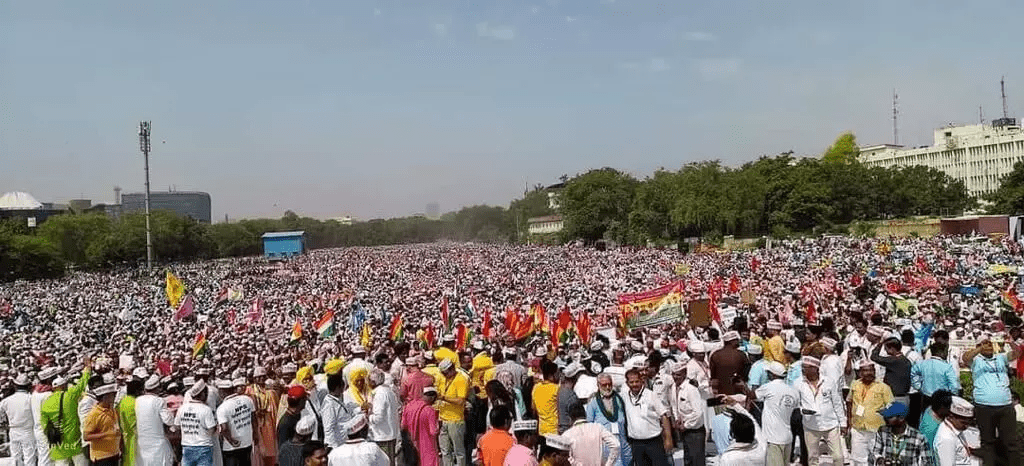
As expectations build, central government employees have laid out a few consistent demands:
- Higher Fitment Factor:
A jump from 2.57 (7th CPC) to at least 3.68 to offset inflation and rising living costs. - Restoration of Old Pension Scheme (OPS):
Employees want the pre-2004 defined pension plan reinstated, arguing that the National Pension System (NPS) lacks financial security. - Rationalization of Pay Matrix:
Calls for better parity between lower-grade and higher-grade staff, ensuring no disproportionate jumps. - More Frequent Revisions:
Many advocate a five-year review cycle instead of ten, to reflect faster economic and cost-of-living changes.
These points underline a larger sentiment: that India’s workforce deserves both fairness and foresight.
Political and Public Repercussions
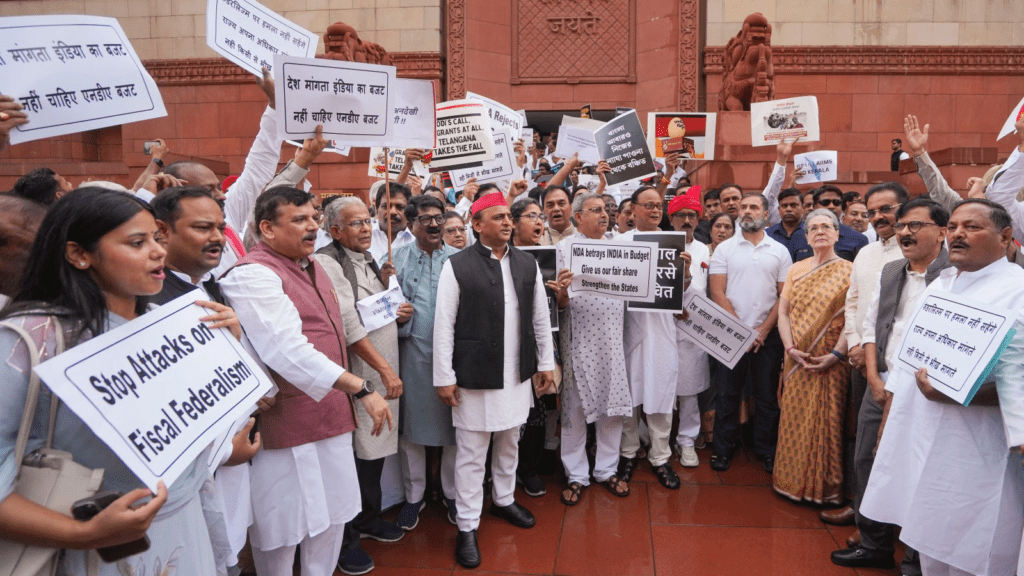
The government’s handling of the 8th pay commission delay has now entered the political domain. Opposition parties, particularly the Congress and AAP, have accused the Centre of ignoring middle-class employees and pensioners — a voter base traditionally loyal to the BJP.
With Lok Sabha elections due in 2026, the timing of the announcement could become politically decisive. Some insiders speculate that the Centre might unveil the 8 pay commission in the Union Budget 2026, turning it into a pre-election boost similar to the farm loan waivers of earlier years.
Political observers, however, warn that such timing risks appearing opportunistic. “It would be wiser to announce it early,” said economist Dr. Parul Mehta, “to maintain credibility rather than treating it as an electoral instrument.”
Expert Opinions: Between Prudence and Populism
Economists remain divided. Some, like former Finance Secretary Arvind Mayaram, believe that delaying the 8th pay commission could help maintain fiscal stability after the government’s heavy expenditure on infrastructure and social welfare schemes.
Others argue that employee morale and purchasing power must take precedence. “Pay commissions are not charity; they are institutional commitments,” said labour economist Dr. Subhash Bhattacharya. “If the government delays too long, it sends a signal of disregard.”
Interestingly, a few policy experts suggest a hybrid model: establish the eighth pay commission formally but stagger its implementation over three years to manage fiscal impact. This would address both political and economic concerns.
Financial Implications: What’s at Stake
Implementing the 8th pay commission will likely cost the central government around ₹2 lakh crore annually — about 0.7% of India’s GDP. State governments, who often mirror central pay revisions, could collectively spend an additional ₹1.2 lakh crore.
The Ministry of Finance’s internal reports have flagged that such expenditure could widen the fiscal deficit temporarily but would also boost consumer spending.
| Fiscal Impact Area | Estimated Cost (₹ crore) | Effect |
| Central Govt Salaries & Pensions | 200,000 | Increases spending power |
| State Govt Adjustments | 120,000 | State budgets under pressure |
| GDP Growth Boost | +0.4% (short-term) | Higher demand in retail, housing |
| Fiscal Deficit Impact | +0.6% | Temporary widening |
This balancing act — between fiscal prudence and employee welfare — will define the political narrative leading into 2026.
The Broader Context: From 7th to 8th Pay Commission
When the 7th Pay Commission was implemented in 2016, it raised salaries by an average of 23.5%. It modernized the pay matrix, simplified the structure, and eliminated grade pay complexities.
However, with rising inflation, the gains have gradually eroded. The current Dearness Allowance (DA) stands at around 46%, reflecting steady cost-of-living escalation. Without the 8th pay commission, government employees fear their purchasing power will decline further.
This underlines why many consider 2026 a make-or-break year for public sector morale.
What the Silence Suggests
The Modi government’s unusual quietness may indicate a larger administrative shift. Sources in the Finance Ministry say the Centre is studying a permanent pay review body — a standing mechanism that monitors wage parity annually instead of forming commissions once a decade.
Such a system would mean smoother revisions, fewer protests, and predictable fiscal planning. But it would also mean the end of a long-standing tradition that once represented milestones in India’s public administration.
As one senior bureaucrat put it, “The 8th pay commission may not be missing — it may simply be evolving.”
Public Sentiment: Between Hope and Frustration
Across social platforms, employees are rallying under hashtags like #8thPayCommission, demanding transparency. Many recall that the Seventh Pay Commission was formed nearly two years before its implementation date — a timeline that has already passed for the current cycle.
While the government continues to emphasize “performance-based pay” in public sector reforms, employees view the absence of official communication as a sign of indifference.In WhatsApp groups of railway staff, income tax officers, and postal workers, one question keeps repeating: “Will January 2026 bring celebration or disappointment?”