
The magic of Karva Chauth lies not only in the fasting and rituals but also in the artistry women carry on their palms. In 2025, modern karva chauth mehndi designs blend simplicity with emotion — a canvas of love and devotion etched in henna. From full-hand patterns that tell a story to easy front hand designs you can DIY, this year’s trend is about individual expression. As one Lucknow artist put it, “Mehndi sirf design nahi hai, yeh ek dua hai.” It’s not just design; it’s a blessing.
Why Full-Hand Mehndi Matters on Karwa Chauth
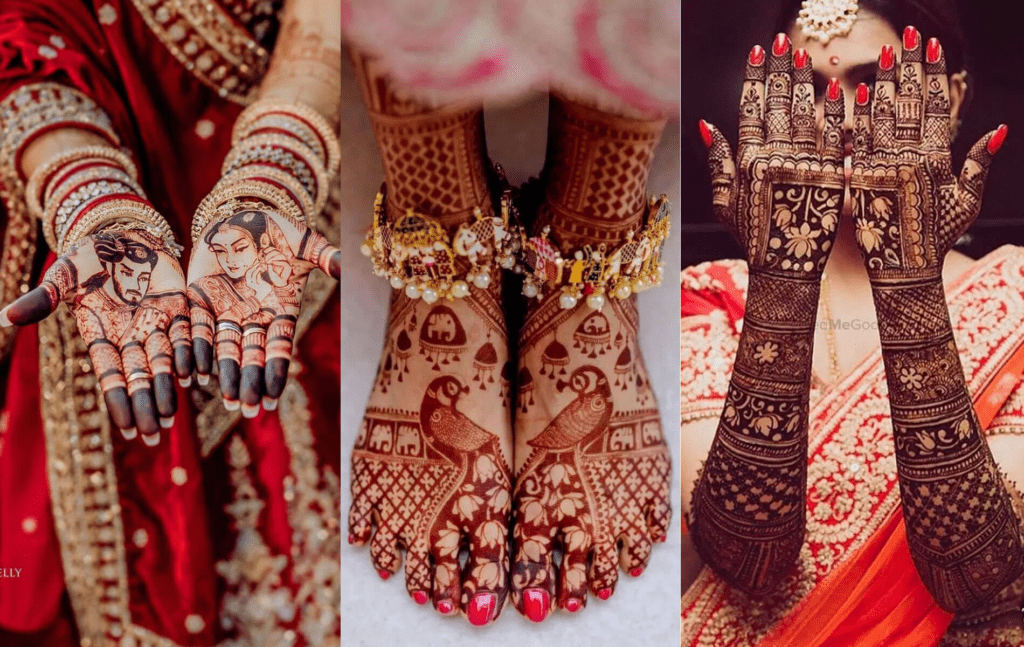
Among the solah shringar, mehndi holds a sacred place. A well-drawn full-hand mehndi design symbolises dedication and togetherness. In India’s heartland, wives believe that the darker the stain, the stronger the bond with their husbands. Even in modern times, that belief lingers — because love is timeless, just like henna.
Yet, “full-hand” doesn’t mean cluttered. The best designs balance dense motifs on the palm with open space around the fingers for a fresh look. Women in Delhi and Jaipur are now requesting lightweight patterns that pair traditional peacocks with negative spaces — modern yet rooted in heritage.
Top Mehndi Ideas for Karwa Chauth 2025
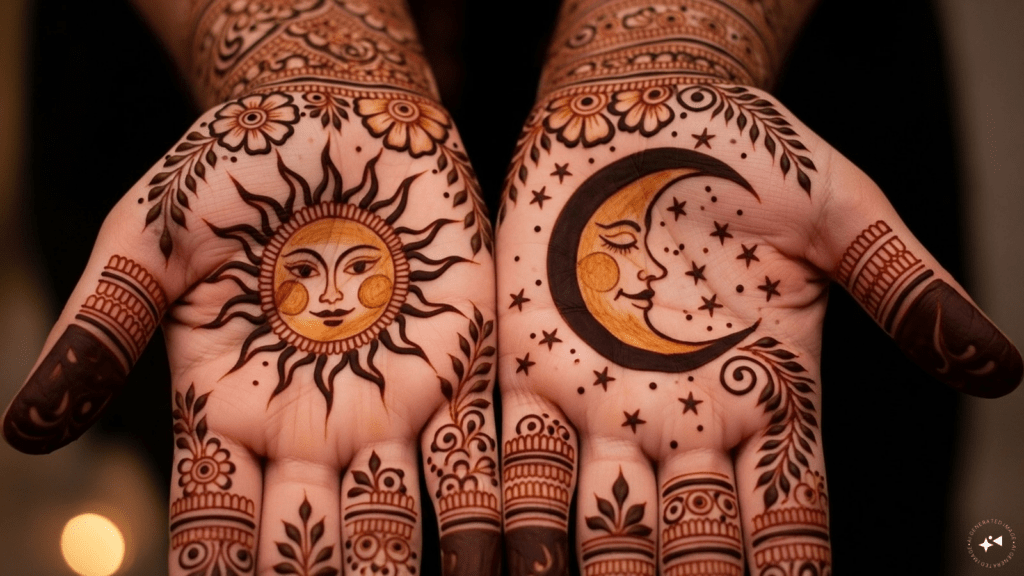
Each design is a narrative — sometimes romantic, sometimes divine, but always Indian at heart.
1. Chand and Channi Motif
The most iconic symbol of Karwa Chauth is the moon (chand). Try a half-moon at the centre of your palm surrounded by delicate dots like tiny stars. Extend a fine net pattern towards the edges, keeping the fingers light with leaves or lines. This easy front hand simple mehndi design is spiritual yet minimal.
2. Peacock and Paisley Charm
Mor aur ambi — the classic duo. Place a peacock on one side of the palm, its tail spilling into paisley curves. Leave small gaps for breathing space. Alternate your fingers with leaf lines for a balanced touch. This is a perfect easy mehndi design for karva chauth celebrations at home or temple.
3. Jaal and Floral Burst
For those who love structure, create a fine mesh (jaal) on the outer palm and let large lotus motifs break the grid. Add triangular borders on the wrist for definition. It’s a blend of geometry and grace — ideal for women who like modern karva chauth mehndi designs with a bold edge.
4. Couple Silhouette with Borders
Personal touches are in. Ask your artist to sketch a bride-groom silhouette in the centre and surround it with lotus borders or leafy frames. This mehndi design photo full hand option is for those who wish to express their own story through art.
5. Folk Pattern Fusion
Bring together Madhubani fish, Warli stick figures, and Gond dots to create a cultural tapestry. Keep the lines consistent so the composition flows. It feels authentic and regional — a nod to India’s art heritage within your mehndi for karwa chauth.
Planning Your Mehndi Step by Step
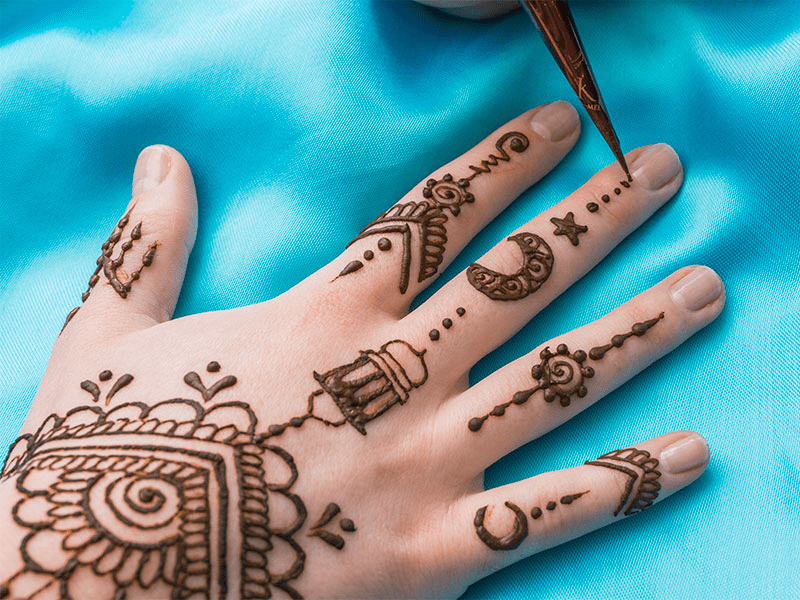
A well-thought design turns a session into a ritual.
- Choose an anchor motif for the palm — moon, peacock, or folk symbol.
- Add vines and floral fillers around it to tie elements together.
- Alternate heavy and light patterns on fingers for visual balance.
- Frame the edges with borders to create a polished finish.
- Leave negative space to make it look breathable and modern.
Popular Full-Hand Design Styles for 2025
Different regions in India follow distinct mehndi traditions. Below is a quick reference for inspiration:
| Design Style | Description | Best For |
| Half-Palm Heavy | Dense palm, light fingers for balance | Quick application |
| Mirror Pattern | Identical on both hands | Festive photo sessions |
| Gradient Fade | Dark near wrist, light towards fingers | Modern look |
| Cutwork Illusion | Skin peeks through floral shapes | Elegant finishing |
| Bracelet Style | Cuff design on wrist blending up | Minimal yet festive |
These ideas are popular among young urban women who want easy mehendi design simple front hand looks that still honour tradition.
Tips for Perfect Colour and Finish
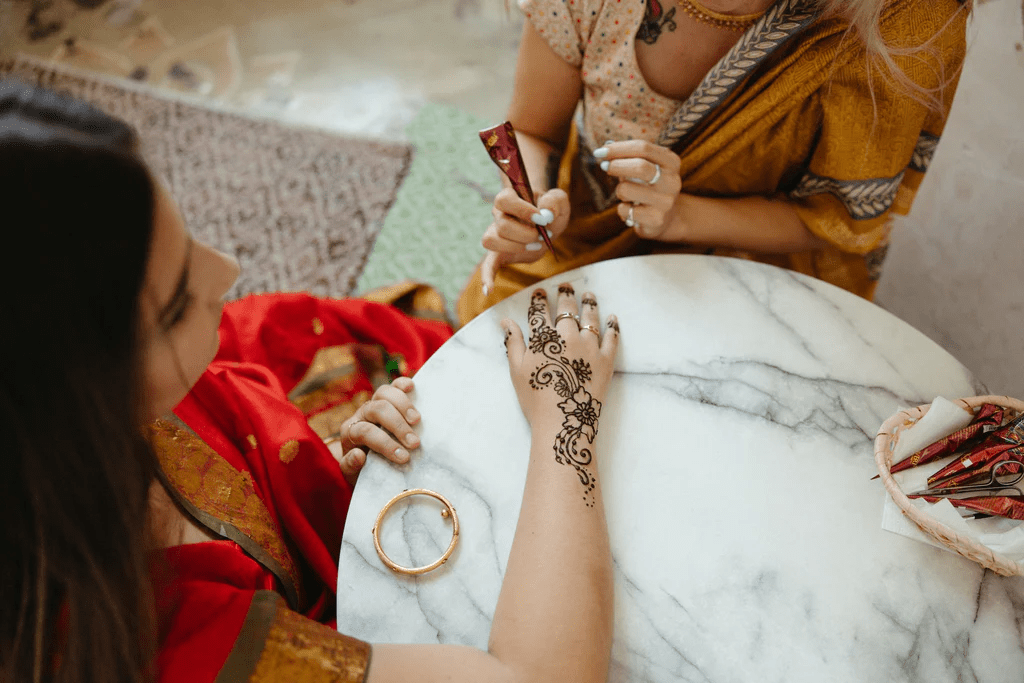
A dark, even stain defines your festival photos. Use good-quality henna with natural oils and avoid chemical cones. After application, apply a lemon–sugar mixture to fix the paste and wrap your hands overnight with tissue or cling film. The next morning, warm your hands gently over a flame for richer colour. Lastly, rub mustard oil before washing to seal the tone. Avoid water for 12 hours — warna rang halkā pad jāyegā!
Talking to Your Mehndi Artist
Carry reference photos or sketches when you visit your artist. Be clear about your motifs — moon, paisley, or peacock — and skip anything you don’t like. Good communication ensures clean, consistent line work. A professional artist needs 1.5–2 hours for both hands, so plan ahead and allow time for drying and touch-ups.
Preparing for Karwa Chauth Mehndi Day
Morning — Keep your hands clean and oil-free.
Afternoon — Start your mehndi session early to let it dry naturally.
Evening — Apply lemon–sugar solution once the paste is firm.
Night — Let it stay overnight for the deepest stain.
Next Morning — Scrape off gently and admire the colour under moonlight.
Why These Designs Reflect True Indian Identity
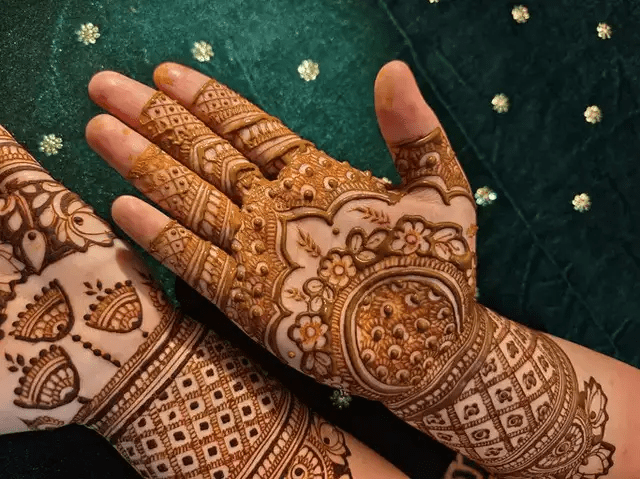
Unlike global fusion patterns that focus on aesthetic symmetry, Indian mehndi is storytelling. Each element — the chand, the kalash, the baraat — carries emotional meaning. The channi used to see the moon becomes a central symbol of faith and longing. Peacocks represent beauty, while lotus flowers signify purity. When these motifs appear together, they tell a personal narrative of devotion and endurance — perfectly fitting the essence of Karwa Chauth.
In smaller towns of Rajasthan and Punjab, many artists still freehand traditional bharwa (filled) designs — thick strokes with miniature temples and diyas. Meanwhile, younger women in Bengaluru or Mumbai prefer easy front hand simple mehndi designs with negative space. The contrast of heavy and light work shows how tradition evolves without losing its soul.
As one artist from Amritsar said, “Karwa Chauth ka mehndi toh pehchān hai suhāgan ki.” Mehndi defines a married woman’s identity on this sacred day.
New Mehndi Design Trends for 2025
The year 2025 marks a return to authenticity — but with refinement. Artists are merging classic Indian elements with modern minimalism. Some popular trends include:
- Minimal Jaali + Statement Motif: Instead of filling every inch, women prefer a soft mesh pattern ending in one grand motif at the wrist.
- Half-Back Designs: Great for women who work during the day but still wish to celebrate — less time-consuming and very aesthetic.
- Fine Line Art: Clean, thin outlines rather than thick strokes — it gives an elegant, contemporary feel.
- Arabic Fusion Accents: Flowing leaves and swirls added to Indian motifs for a more graceful transition between elements.
Each of these represents the balance between convenience and culture — modern karva chauth mehndi designs that respect time yet radiate meaning.
Combining Beauty with Ritual
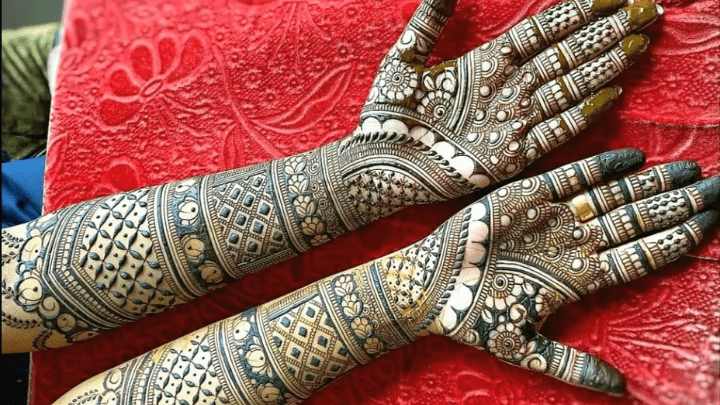
Mehndi isn’t just decoration. On Karwa Chauth, it’s an offering — a prarthana painted on the skin. Women often sit together in circles, exchanging designs, sharing laughter, and waiting for the stain to darken. That collective moment of sisterhood is as important as the artistry itself.
In many homes, elder women still whisper traditional sayings:
“Jitna gehra mehndi ka rang, utna gehra pati ka pyaar.”
The darker the henna, the deeper the husband’s love.
While today’s urban women may smile at the old belief, they still cherish the charm it brings. It connects generations and turns a beauty ritual into shared heritage.
Modern Tools and DIY Tips
Not everyone hires a professional artist. Many prefer to design their own mehndi at home. For beginners, start with easy mehndi design simple front hand ideas using cones with fine nozzles. Choose a balanced flow of dots, leaves, and spirals. You can even use stencils or pre-printed outlines to practice symmetry.
DIY hack:
Mix your henna paste with clove oil and a few drops of eucalyptus for a strong colour payoff. Store it in the refrigerator overnight before application.
Post-care tip:
Avoid washing your hands for 10–12 hours and apply coconut oil before sleep. This helps preserve the mehndi design photo full hand look till the festival ends.
Regional Inspirations Across India
Indian mehndi art reflects regional identity. Here’s a glimpse of popular patterns across states:
| Region | Style Name | Signature Motif |
| Rajasthan | Bharwa Mehndi | Elephants and palaces |
| Punjab | Traditional Bridal | Kalash and couple scenes |
| Gujarat | Folk Fusion | Dandiya dancers and paisleys |
| Maharashtra | Minimal Elegant | Circular mandala motifs |
| South India | Modern Floral | Jasmine and mango leaves |
Each pattern has its rhythm. Whether you prefer Gujarati folk style or Punjabi bridal density, the key is consistency — clean lines, balanced spacing, and confident strokes.
Choosing the Right Look for You
Your mehndi reflects your personality. Are you traditional, minimal, or experimental?
- For Traditional Lovers: Go for full hand mehndi designs with kalash, moon, and doli patterns.
- For Working Women: Pick easy front hand simple mehndi design with geometric lines and floral cuffs.
- For Newlyweds: Try couple silhouettes and initials — emotional yet classy.
- For Trendsetters: Explore Arabic–Indian fusion or bracelet-style wrists.
Remember, the best mehndi is not about complexity but connection — how deeply it resonates with your emotion and story.
Beyond Beauty: A Cultural Statement
In today’s fast-changing India, Karwa Chauth stands as a symbol of continuity. From Bollywood brides flaunting new mehndi design photo posts to everyday women balancing office and tradition, the ritual thrives because it evolves. Mehndi becomes the meeting point of art, culture, and affection — simple yet profound.
The artistry also reflects empowerment. Where once women waited for designs to be drawn, now they create their own — shaping not just patterns but identity. That’s the essence of modern India: tradition redesigned with confidence.