
The festival of Dussehra, also known as Vijayadashami, will be celebrated on 15 October 2021 across India. This day signifies the victory of Lord Rama over Ravana and symbolizes the eternal truth that good always triumphs over evil. For millions of Hindus, Dussehra marks the culmination of Navratri, a nine-night festival honoring Goddess Durga in her various forms.
In different corners of India — from Mysuru’s grand Dasara to Delhi’s Ramlila grounds — the festival carries unique traditions and local flavors. The celebration extends beyond India’s borders, finding observance in Nepal, Bhutan, and Myanmar, where the cultural spirit of Vijayadashami continues to thrive.
जैसे कहा गया है — “सत्यमेव जयते”, truth alone triumphs, and Dussehra reminds us of that timeless principle.
Dussehra 2021 Date and Timings
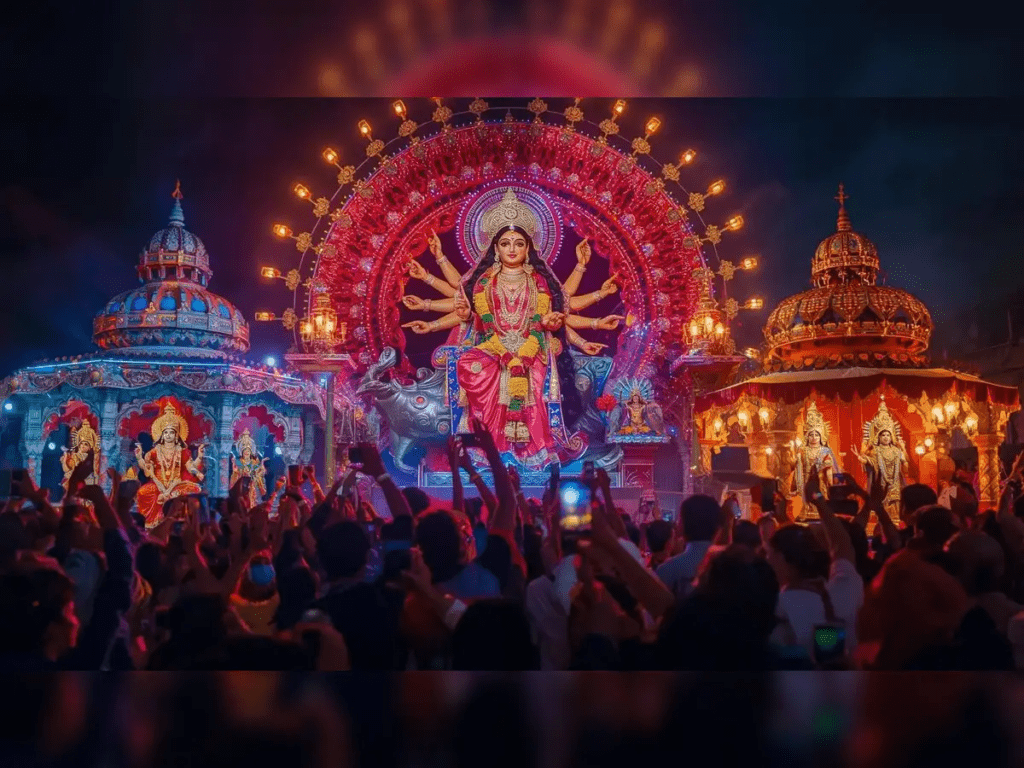
According to the Hindu lunar calendar, Dussehra falls on the tenth day (Dashami) of the Ashwin month, immediately after Navratri.
For 2021, the Dashami Tithi begins at 6:52 PM on 14 October and ends at 6:02 PM on 15 October.
The Vijay Muhurat — considered the most auspicious time for performing Dussehra rituals — is between 2:02 PM and 2:48 PM on 15 October. Devotees often use this time for Shami Puja, Aparajita Puja, and Seema Avalanghan, prayers that invoke victory and protection.
Vijayadashami and Its Historical Meaning
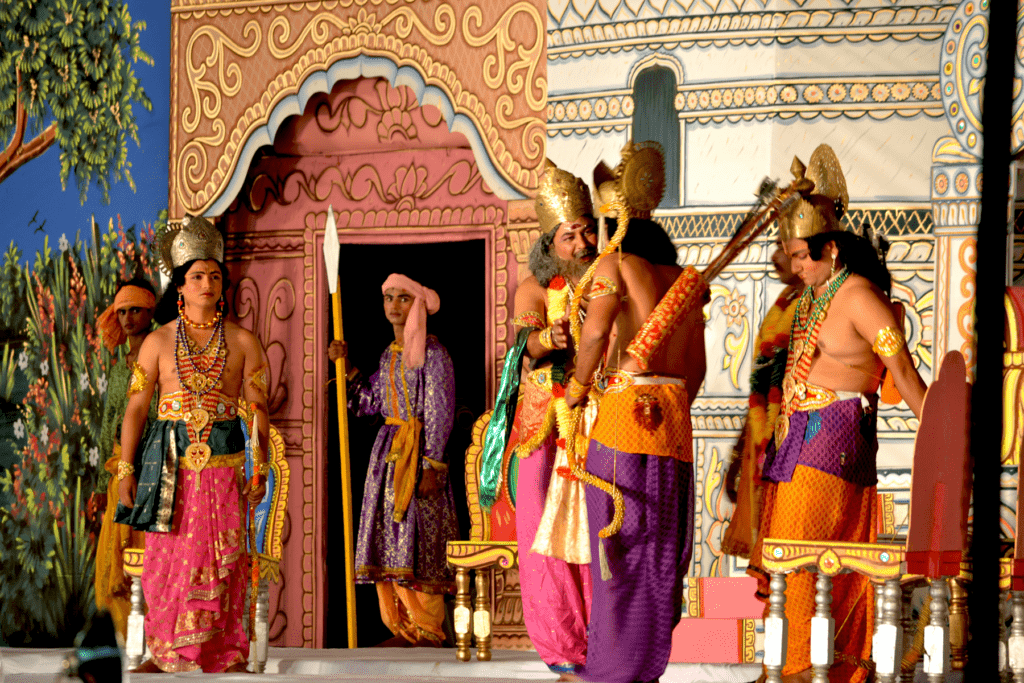
The word “Vijayadashami” literally means “the tenth day of victory.” Mythologically, it commemorates Lord Rama’s return to Ayodhya after defeating the demon king Ravana in Lanka. Across India, Ramlila performances conclude on this day with effigies of Ravana, Meghnath, and Kumbhkaran being set ablaze — a visual spectacle of light, sound, and faith.
At the same time, in eastern states like West Bengal and Odisha, Vijayadashami marks the immersion of Goddess Durga idols into rivers, symbolizing her return to the Himalayas. This dual significance — Rama’s triumph and Durga’s return — unites devotees in celebration.
Dasara 2021 Date and Significance in South India
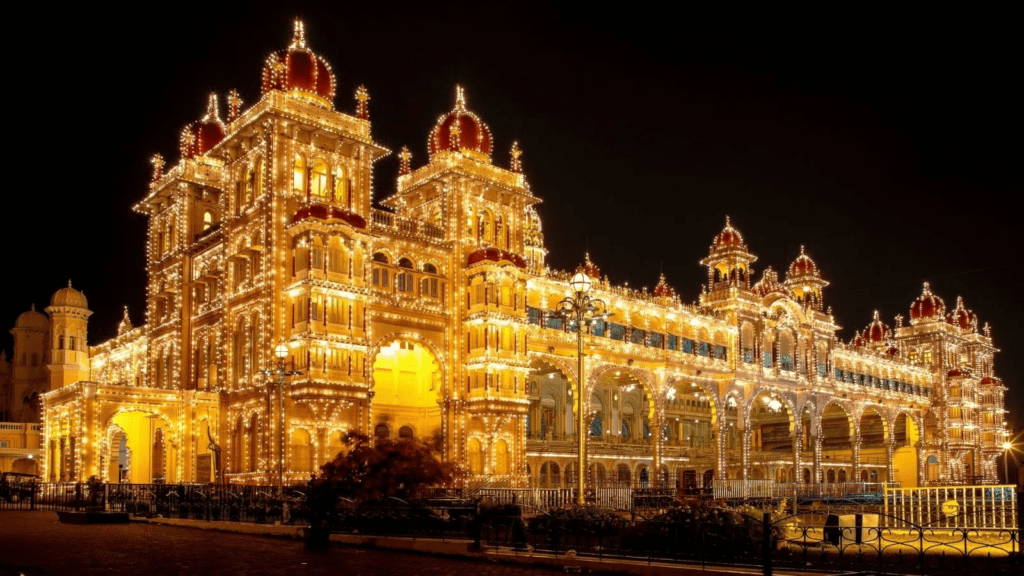
In Karnataka, the festival is celebrated as Dasara, with the royal family of Mysuru leading a grand procession. The Mysore Palace is illuminated with thousands of bulbs, while cultural programs, classical music, and folk dances attract visitors from all over the country.
In Tamil Nadu and Andhra Pradesh, families arrange “Bommai Kolu” — decorative displays of dolls representing gods, goddesses, and scenes from Hindu epics. These arrangements, passed down through generations, symbolize the victory of divine order over chaos.
Rituals and Customs on Dussehra
Rituals vary across regions, but their essence remains constant: celebrating good over evil, discipline over desire, and dharma over adharma.
During Aparahna time (afternoon hours), devotees conduct the following rituals:
- Shami Puja — Worship of the Shami tree, associated with Pandavas and the victory in Kurukshetra.
- Aparajita Puja — Prayer to the goddess who ensures victory in righteous endeavors.
- Seema Avalanghan — Symbolic crossing of boundaries, representing the conquest of fear and limitations.
These pujas are performed with reverence, offering flowers, turmeric, and rice, while families chant mantras for courage and prosperity.
Traditional Dussehra Practices in Indian Homes
In many Indian households, Dussehra also marks the day for new beginnings. People start new business ventures, buy vehicles, or exchange gifts, believing it ensures auspicious outcomes.
Elders bless younger family members by applying a red tika made of vermilion (sindoor) mixed with yogurt and rice on their foreheads. This ritual, common in North India, signifies prosperity, family unity, and protection.
As elders place the tika, they often say, “Vijay Lakshmi tumhare saath rahe” — may victory and grace stay with you.
Dussehra in Neighboring Countries
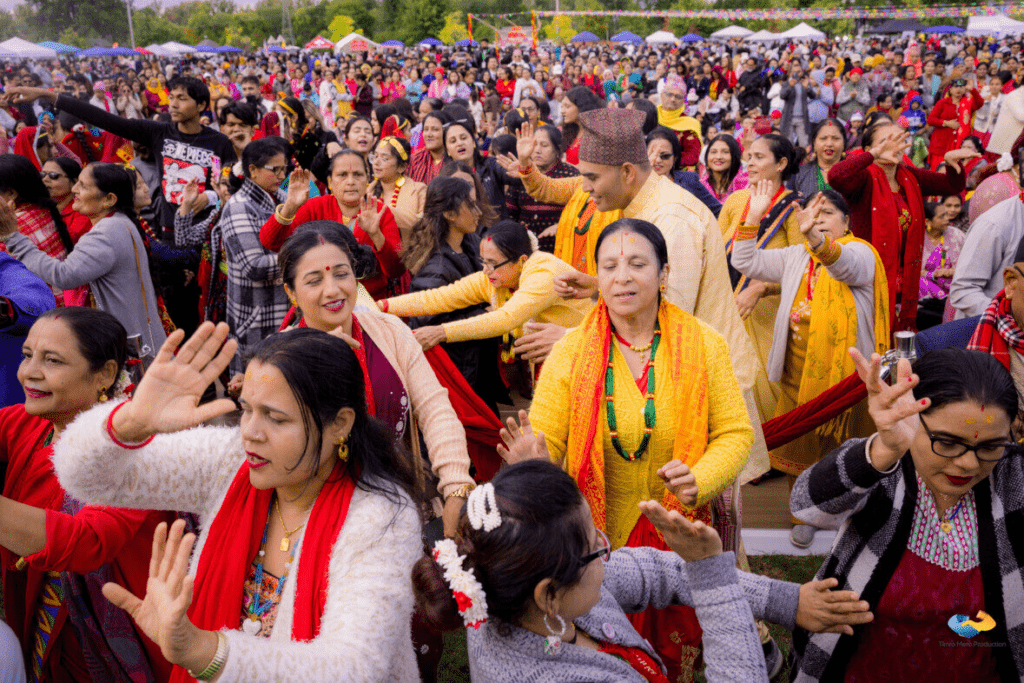
Beyond India, Dussehra finds its echo in Nepal, Bhutan, and Myanmar, reflecting centuries of shared culture. In Nepal, the festival is celebrated as Dashain, a two-week-long event that honors Goddess Durga’s victory over Mahishasura.
In Bhutan and Myanmar, local Hindu and Buddhist communities join in prayers, illustrating how the story of righteousness transcends borders.
Symbolism of Colors and Offerings
Every ritual and color during Dussehra carries spiritual symbolism. The red hue of the tika signifies energy and life, while yellow denotes knowledge and purity. Offerings like sugarcane, coconut, and jaggery are part of the festive feast, reminding devotees to live with gratitude.
Some people also exchange Shami leaves (known as sona patta) as a gesture of friendship and goodwill. It recalls the legend where Pandavas hid their weapons in a Shami tree before their final battle in the Mahabharata.
Key Details of Dussehra 2021
| Event | Date/Time (2021) | Significance |
| Dashami Tithi Begins | 14 October, 6:52 PM | Start of the tenth lunar day |
| Dashami Tithi Ends | 15 October, 6:02 PM | End of auspicious day |
| Vijay Muhurat | 2:02 PM – 2:48 PM | Time for rituals and victory prayers |
| Festival Celebration | 15 October 2021 | Dussehra/Vijayadashami |
Cultural Importance of Dussehra
Dussehra goes beyond myth; it teaches values of justice, patience, and moral strength. It encourages people to fight their personal “Ravanas” — anger, greed, and ego.
In northern cities like Lucknow and Varanasi, Ramlila shows have become community events that unite thousands under the same message — dharma always prevails. In schools, children dress as Lord Rama, Lakshman, and Hanuman, while temples resonate with chants of “Jai Shri Ram!”
Modern Relevance: Dussehra in 2021
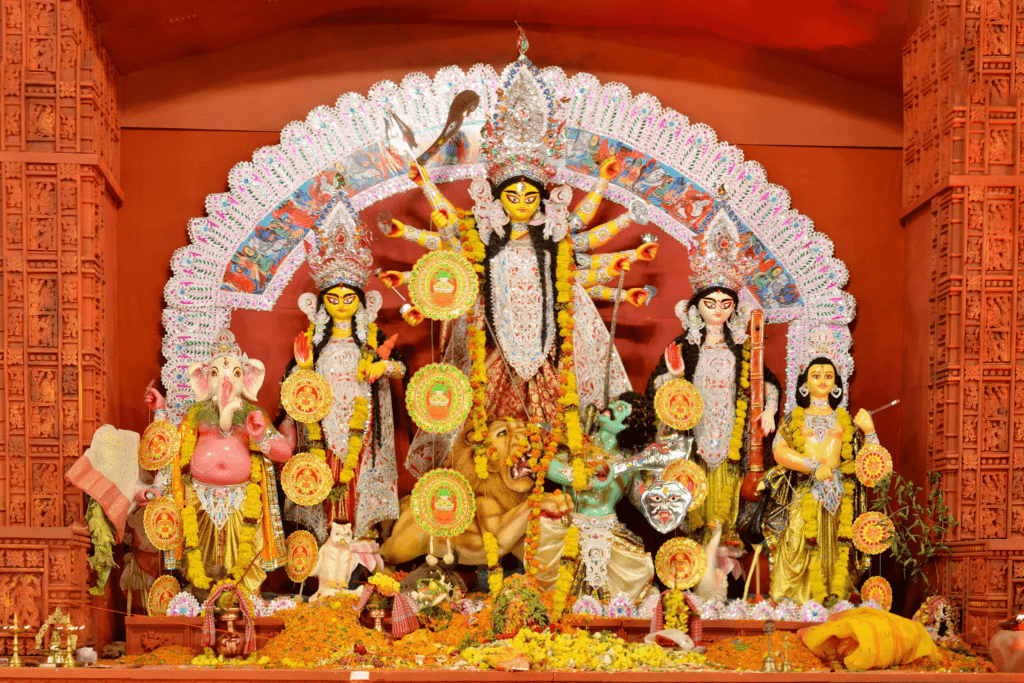
In a post-pandemic India, the 2021 Dussehra was not just about rituals — it was about resilience. People saw in Lord Rama’s return the symbol of recovery and renewal. From online pujas to socially distanced Ramlilas, devotees found new ways to uphold tradition while ensuring safety.
This blend of faith and adaptation reflected India’s timeless strength — “Yug badalte hain, par shraddha wahi rehti hai” (Times change, but faith remains constant).
Blessings and Reflections
As the effigies of Ravana burn and the sky fills with fireworks, Dussehra urges every Indian to rise above negativity. The victory of good over evil is not just a story — it’s a reminder of what keeps our civilization alive.
So, whether you call it Dussehra, Dasara, or Vijayadashami, the spirit remains one — victory through virtue.May this festival bring peace, health, and prosperity to all. शुभ विजयादशमी!