
Durga Puja, one of India’s most revered festivals, will be celebrated in 2025 from September 27 to October 2, marking five glorious days of devotion, artistry, and cultural unity. These dates, aligned with the lunar month of Ashwina Shukla Paksha, coincide with the end of Navratri 2025, when Goddess Durga is worshipped in her nine divine forms.
Across West Bengal, Assam, Tripura, Odisha, and Bihar, entire cities transform into sanctuaries of faith — streets glowing with diyas, echoing with conch shells, and filled with the fragrance of incense. Durga Puja is not just a religious event; it is a cultural movement that binds generations through rhythm, ritual, and reverence.
In Hindu belief, these five days commemorate the victory of Goddess Durga over the buffalo demon Mahishasura — a timeless reminder that good always triumphs over evil. As the shloka says, “Jai Maa Durga — Shakti ka pratik, vijay ka pratik.”
Durga Puja 2025 Date and Festival Calendar
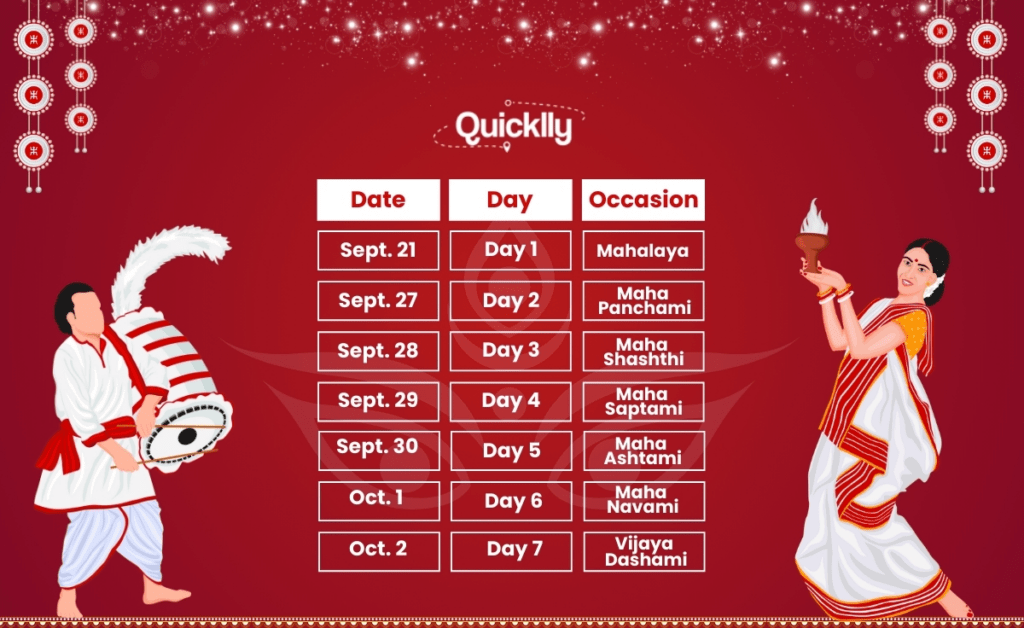
Durga Puja officially begins on Shashthi Tithi (the sixth lunar day) and concludes on Dashami Tithi, known as Vijaya Dashami, when idols of the goddess are immersed in rivers and lakes.
Here’s a detailed calendar for Durga Puja 2025:
| Date | Day | Occasion | Key Rituals |
| September 27, 2025 | Saturday | Bilva Nimantran | Ritual invitation to Goddess Durga |
| September 28, 2025 | Sunday | Shashthi | Kalparambha and Bodhan – welcoming the Goddess |
| September 29, 2025 | Monday | Maha Saptami | Kolabou Puja and early morning rituals |
| September 30, 2025 | Tuesday | Maha Ashtami | Sandhi Puja and Anjali offerings |
| October 1, 2025 | Wednesday | Maha Navami | Navami Homa and sacred prayers |
| October 2, 2025 | Thursday | Vijaya Dashami | Durga Visarjan and Sindoor Khela |
This year’s celebrations align closely with the Navratri 2025 calendar, allowing devotees to experience both Navami 2025 and Vijaya Dashami within the same devotional cycle.
Cultural Significance of Durga Puja
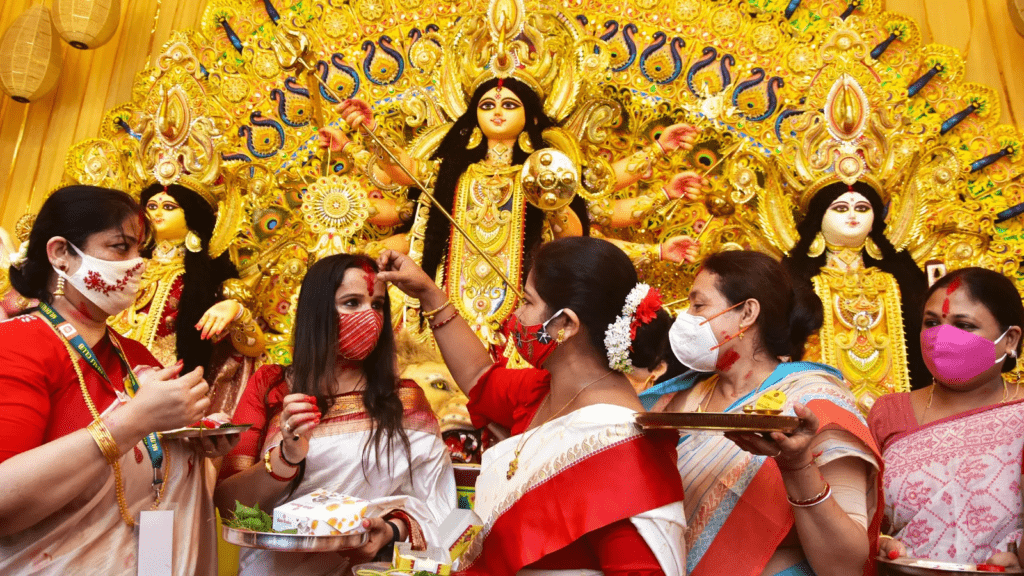
The grandeur of Durga Puja lies not only in its rituals but in its social spirit. It brings people together — artists, priests, musicians, and craftsmen — in one vast collaborative expression of faith.
In Bengal, the festival’s energy begins weeks earlier. Artisans from Kumartuli, Kolkata’s famous idol-making district, sculpt elaborate Durga murtis using clay from the Ganges. The final touch — painting Maa Durga’s eyes — is known as Chokkhu Daan, done only after sunrise prayers.
In Hindi, they say, “Maa aankh kholti hai toh aastha jagti hai” — when the Mother opens her eyes, faith awakens.
Across India, each region personalizes the festival. Odisha hosts Dussehra Yatra, Bihar blends it with Ram Navami themes, and Assam celebrates with processions and devotional music. Every locale interprets the goddess through its cultural lens, creating a mosaic of traditions that define India’s diversity.
Rituals and Celebrations: A 5-Day Journey of Devotion
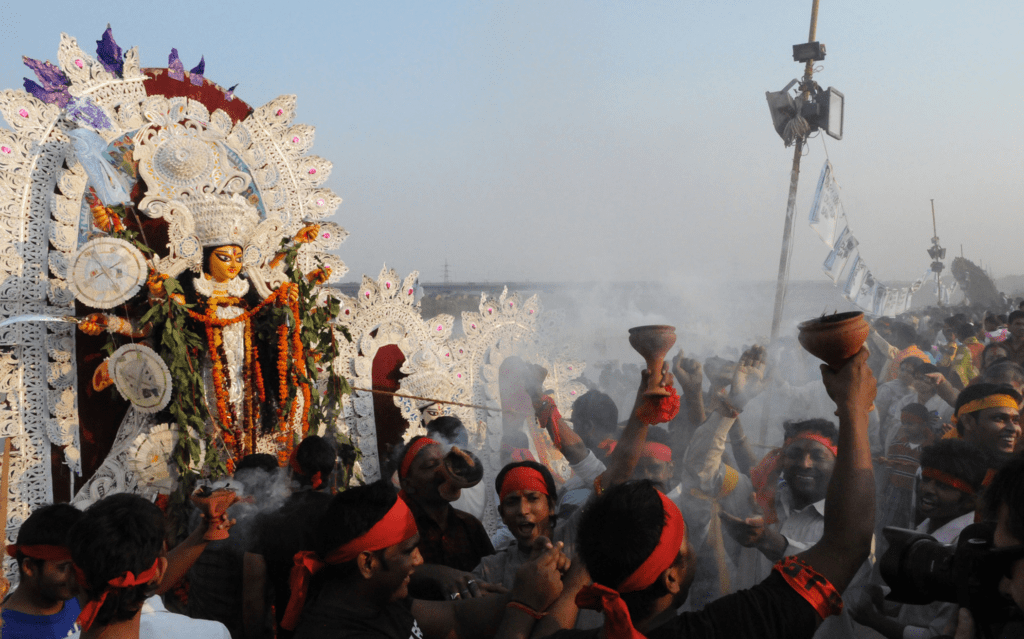
The five days of Durga Puja mark the complete narrative of the goddess’s descent, victory, and departure.
Day 1: Shashthi – The Arrival of the Goddess
The festival begins with Kalparambha, Bodhan, and Amantran, symbolising the awakening of the goddess’s divine energy. Families perform bilva nimantran rituals, inviting Durga to bless their homes. Pandals open their gates with chanting of Durga Stotra and the beating of dhak drums.
Day 2: Maha Saptami – Invocation through Water and Nature
On the seventh day, Kolabou Puja takes place — a banana plant draped in a red-bordered sari is worshipped as the wife of Lord Ganesha. This ritual, deeply rooted in agrarian culture, represents fertility and prosperity.
In rural Bengal, farmers offer the first harvest to the goddess. It’s a celebration of nature’s abundance — Prakriti aur Shakti ek hai, as devotees say.
Day 3: Maha Ashtami – The Moment of Power
The third day, Maha Ashtami, is the festival’s spiritual high point. Devotees perform Sandhi Puja at the junction of Ashtami and Navami — a sacred 48-minute period believed to mark the exact moment Maa Durga defeated Mahishasura.
Priests light 108 lamps, conch shells echo through pandals, and devotees offer pushpanjali (flowers) in silent prayer. Young girls, seen as incarnations of the goddess, are worshipped during Kanya Puja.
From Kolkata’s Park Street to Delhi’s Chittaranjan Park, the sight is the same — people dressed in traditional attire, hands folded, faces radiant with reverence.
Day 4: Maha Navami – Prayer and Purification
The ninth day, Navami 2025, celebrates Maa Siddhidatri, the granter of wisdom and perfection. Navami Homa (sacred fire ritual) is performed across temples and households.
Food offerings like khichuri, begun bhaja, and payesh are prepared as bhog for the goddess. Women participate in group chanting of Durga Chalisa, while men perform charity and distribution of food among the needy.
“Jo maa ko prasad khilata hai, uske ghar mein barkat bas jaati hai,” said an elderly devotee in Cuttack — whoever feeds the goddess finds abundance at home.
Day 5: Vijaya Dashami — Farewell and Triumph
The final day of Durga Puja, October 2, 2025, coincides with Vijaya Dashami. It represents not only Maa Durga’s victory over Mahishasura but also her emotional departure to her celestial abode. Across India, this day is filled with joy, devotion, and a touch of melancholy — “bidai ke aansu aur vijay ka garv dono saath hote hain.”
In West Bengal, the famous Sindoor Khela takes place, where married women apply vermilion (sindoor) to the goddess and to each other, wishing for marital happiness and prosperity. The scene — red-dusted faces, smiling eyes, rhythmic beats of the dhak — captures the very soul of Bengal’s cultural identity.
In Assam and Tripura, devotees accompany the goddess’s idol for Visarjan, singing “Durga Ma go asche bochor abar” (Mother, return again next year). The immersion marks the symbolic return of Durga to Mount Kailash, and with her, the restoration of peace and cosmic balance.
Spiritual Meaning Behind Durga Puja
Beyond its grandeur, Durga Puja carries a profound philosophical core. Each form of the goddess embodies one aspect of the human journey — courage, compassion, balance, and victory over ignorance.
“Shakti bina shanti sambhav nahi” — without divine power, peace is impossible. This festival reminds devotees that Durga resides not in temples alone but within every individual who chooses righteousness over fear.
In contemporary India, Durga Puja’s essence extends to empowerment. It honours the strength of women who lead families, workplaces, and communities. From homemakers in Ranchi to tech entrepreneurs in Bengaluru, the message is universal — every woman carries a spark of Durga within her.
How Many Days Is Durga Puja in 2025?
The celebration will last five main days, beginning on Shashthi Tithi (September 28, 2025) and concluding with Vijaya Dashami (October 2, 2025). However, the preparation and rituals — from Mahalaya (invoking the goddess) to Durga Visarjan — extend over nearly ten days.
Many devotees also align these observances with the Navratri 2025 cycle, merging daily prayers to Maa Durga, Lakshmi, and Saraswati with the puja rituals. This convergence of traditions shows how the festival blends devotion and diversity — where faith unites, not divides.
Durga Puja 2025 Mantras and Chants
Mantras play a vital role in the Puja rituals, purifying the atmosphere and invoking the goddess’s presence. Here are three timeless chants recited during Durga Ashtami and Navami Homa:
- Jayanti Mangala Kaali Bhadrakaali Kapalini
Durga Kshama Shivadhatri Swaha Swadha Namostute
(Salutations to the eternal mother who grants strength and forgiveness.) - Sarva Mangal Maangalyaye Shive Sarvartha Sadhike
Sharanye Trayambike Gauri Narayani Namostute
(You are the auspicious one who fulfills every wish — we surrender to you, O Narayani.) - Sarva Badha Vinirmukto Dhan Dhanyayei Sutanvitaha
Manushyo Matprasaaden Bhavishyati Na Sanshayah
(May the goddess remove all obstacles and grant prosperity to her devotees.)
In homes and temples alike, these hymns echo through the evenings, creating an atmosphere where devotion merges with serenity — “Maa ke naam se hi mann shaant ho jaata hai.”
Regional Variations and Festive Practices
Durga Puja 2025 will once again showcase India’s regional diversity.
- West Bengal: Pandals will feature artistic themes — from mythology to modern social messages. Kolkata’s Kumartuli artisans are already preparing eco-friendly idols for 2025.
- Assam: Traditional Bhortal Nritya performances and riverfront immersions are central highlights.
- Odisha: The Chandi Patha and Ravana Podi mark symbolic destruction of ego and evil.
- Bihar & Jharkhand: The festival often overlaps with Ram Navami, celebrating victory and moral clarity.
- Delhi & Mumbai: Large community pandals bring together Bengalis and non-Bengalis alike, turning metros into miniature versions of Kolkata.
This geographical unity under one divine celebration makes Durga Puja not just a festival, but a living expression of India’s plural identity.
Economic and Cultural Impact
Beyond faith, Durga Puja is an economic engine — particularly in eastern India. In 2024, the festival generated over ₹50,000 crore in spending across art, food, retail, and tourism sectors, according to West Bengal’s tourism board. A similar or higher trend is expected in Durga Puja 2025.
Artisans, lighting specialists, and local textile industries see massive seasonal employment. For thousands, these five days sustain livelihoods for the entire year. That’s why Durga Puja is not only religion — it’s also resurgence.
The Emotional Farewell and Message for 2025
As the festival concludes with immersion, many devotees shed tears, whispering a single phrase — “Asche bochor abar hobe” (It will happen again next year). This farewell isn’t sadness; it’s hope.
Durga Puja 2025, with its alignment to Navratri 2025 dates, will remind India once again of its collective heartbeat — faith in the feminine divine, trust in moral courage, and belief that light always returns.
In the words of a priest at Kalighat Temple, “Every Visarjan is not an ending but an invitation — an invitation for Maa Durga to dwell in our lives beyond these five days.”
So, as drums fade and idols dissolve into rivers, one truth remains eternal: Shakti abhi bhi zinda hai. The power of the goddess lives on — in every act of kindness, every struggle for justice, and every song of faith.